


This is the link to the full you tube tutorial : How to Design a Paper Piecing Quilt Pattern https://youtu.be/T2wWlWyCqhI
Cassie Cartmell – Faodail Creation
Table of Contents
How to Design a Paper Piecing Quilt Pattern

Designing your own quilt is one of the most rewarding parts of quilting, especially when you create something completely unique. How to Design a Paper Piecing Quilt Pattern doesn’t have to be difficult. With a little planning, graph paper, and creativity, you can create a stunning quilt pattern that perfectly matches your home décor.
In this tutorial, I’ll walk you through the planning process I used to design a modern king-size quilt using bedding sheets. Instead of purchasing expensive quilting fabric, I decided to repurpose a king-size bedding set into a one-of-a-kind quilt that perfectly complements my bedroom.
If you’ve ever wanted to create your own foundation paper piecing pattern rather than using someone else’s design, this guide will give you the confidence to get started.
Why I Decided to Design My Own Quilt Pattern – How to Design a Paper Piecing Quilt Pattern

This project is the second part of my king-size quilt series. Before I even started sewing, I spent time deciding exactly what I wanted this quilt to look like.
One thing I knew immediately was that I wanted a completely different style than my previous quilts.
For years I’ve made quilts using tiny blocks, often sewing hundreds of 2½-inch squares together. While I love the finished look, those projects can take weeks or even months to complete.
This time I wanted something much simpler.
Instead of tiny blocks, I chose to build my quilt using 10-inch foundation paper pieced blocks. Larger blocks mean fewer seams, quicker assembly, and a much faster path to completing an entire king-size quilt.
How to Design a Paper Piecing Quilt Pattern Using Inspiration Around You – How to Design a Paper Piecing Quilt Pattern
One of the best places to find quilt inspiration isn’t necessarily another quilt.
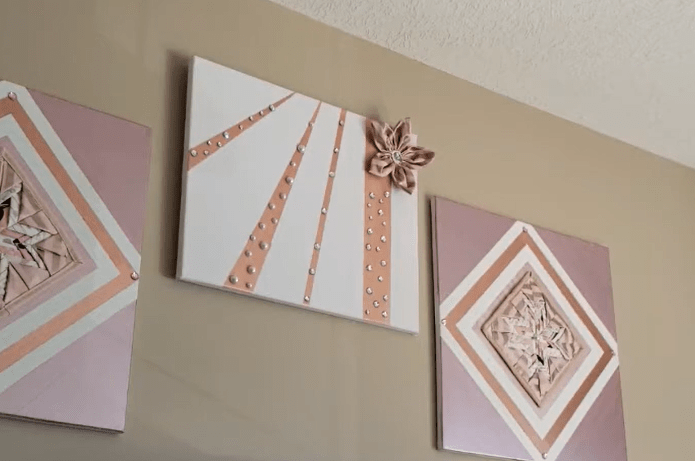
While filming my previous video, I noticed one of the framed pictures hanging behind me.
It wasn’t the flowers that caught my attention.
Instead, I loved the flowing lines that extended from the center of the artwork. Those clean geometric lines immediately made me think they would translate beautifully into a modern quilt block.
Rather than copying the artwork exactly, I used it as inspiration.
I wanted to simplify the design and remove any elements that looked too traditional.
Modern quilts often rely on clean lines, negative space, and bold colour placement instead of complicated repeating motifs. That’s exactly the direction I wanted this project to take.
Planning the Quilt Block – How to Design a Paper Piecing Quilt Pattern

The first step was creating a block layout.
Using large ledger paper, I drew a 10-inch square that would become the foundation for every quilt block.
Once the square was complete, I sketched the diagonal lines inspired by the artwork.
Drawing the pattern by hand allowed me to experiment with different layouts before committing to the final design.
This planning stage is one of the most important parts of How to Design a Paper Piecing Quilt Pattern, because even small adjustments to your lines can completely change the finished quilt.
Why I Chose Large Quilt Blocks – How to Design a Paper Piecing Quilt Pattern
There were several reasons for choosing 10-inch blocks:
- Faster sewing
- Fewer seams
- Easier fabric placement
- Less trimming
- Quicker quilt assembly
- A more modern overall appearance
For a king-size quilt, larger blocks also make the design much more dramatic when viewed from across the room.
Printing the Foundation Paper Pattern
After finalizing my block design, it was time to create copies.
Originally, I planned to visit my local library because they offer inexpensive large-format photocopying.
Unfortunately, the library wasn’t available at the time, so I visited a local office supply store instead.
For only a few cents per page, I had my block enlarged onto ledger-size paper.
This made the pattern much easier to work with while keeping every line perfectly accurate.
Don’t Forget the Seam Allowance – How to Design a Paper Piecing Quilt Pattern Using Inspiration Around You – How to Design a Paper Piecing Quilt Pattern
One thing many beginner paper piecers overlook is the seam allowance.
Your printed design only represents the finished block.
You’ll need to add an extra ¼-inch seam allowance around the outside edge so your finished blocks sew together accurately.
Without this extra allowance, your quilt will gradually become smaller than intended.
Always double-check your measurements before printing dozens of copies.
Printing Enough Copies for a King-Size Quilt – How to Design a Paper Piecing Quilt Pattern
A king-size quilt requires a surprising number of blocks.
Based on my calculations, I needed approximately 43 ten-inch blocks to complete the quilt top.
Instead of printing exactly that number, I printed around 50 copies.
Having a few extras gives you room for mistakes, practice blocks, or unexpected fabric placement changes.
I also kept one untouched copy as a master pattern in case I ever needed additional photocopies later.
Choosing Colours for a Modern Quilt

After finishing the pattern design, the next challenge was deciding where each fabric colour would go.
This is often the hardest part of designing any quilt.
Rather than assigning identical colours to every block, I wanted the colours to flow naturally across the quilt.
Repeating the exact same layout over and over tends to create a traditional appearance.
Instead, I wanted each block to feel slightly different while still maintaining an overall cohesive colour palette.
This flexible approach gives the quilt a much more modern feel.
Using Bedding Sheets Instead of Quilting Fabric – How to Design a Paper Piecing Quilt Pattern

One of the most exciting parts of this project is using an inexpensive bedding set as fabric.
The bedding includes:
- A fitted sheet
- A flat sheet
- Two pillowcases
These provide an incredible amount of coordinating fabric at a fraction of the cost of purchasing quilting cotton by the metre.
The fitted sheet will become the primary background fabric throughout the quilt.
Using one dominant colour helps tie all of the different blocks together while allowing the accent colours to stand out.
Building a Colour Palette – How to Design a Paper Piecing Quilt Pattern
The bedding set includes several beautiful coordinating colours.
Some of the main colours include:
- Soft teal
- Warm grey
- Dusty blue
- Muted pink
These shades perfectly match the colours already found throughout my bedroom.
Instead of designing a quilt for another room in the house, I wanted this project to become a true part of the bedroom décor.
Matching the quilt to existing pillows, bedding, and accessories creates a much more polished and intentional look.
Designing a Quilt That Matches Your Room – How to Design a Paper Piecing Quilt Pattern

When planning a quilt, don’t just think about the fabric.
Think about where the quilt will live.
I already had decorative pillows in dusty pinks and soft blues that I absolutely loved.
Those became the inspiration for the quilt’s final colour palette.
Rather than introducing dozens of random colours, I narrowed my choices to a handful of coordinated shades that would create a calm, romantic atmosphere.
This is another important aspect of How to Design a Paper Piecing Quilt Pattern. Designing with your room in mind helps ensure the finished quilt looks intentional and beautifully coordinated rather than overwhelming.
How to Design a Paper Piecing Quilt Pattern with a Modern Layout
One of the biggest goals for this quilt was to create a design that felt fresh and modern rather than traditional.
Traditional quilts often feature repeating blocks with identical fabric placement. While they are beautiful, I wanted to experiment with something a little different for this project.
Instead of assigning the same fabrics to every block, I’m planning to move the colours around as I sew. Some blocks may have more teal, while others may feature more dusty pink or grey. This random colour placement should create movement across the quilt while still maintaining a cohesive look.
One of the advantages of designing your own quilt is that you don’t have to follow strict rules. You can adjust the colours as you go until you’re happy with the overall design.
Foundation Paper Piecing Gives You Complete Creative Freedom – How to Design a Paper Piecing Quilt Pattern
Foundation paper piecing is one of my favourite quilting techniques because it allows you to sew precise shapes that would be difficult using traditional piecing methods.
By sewing directly onto a printed paper pattern, every seam stays exactly where it belongs.
The benefits include:
- Extremely accurate points
- Sharp angles
- Perfect seam placement
- Easy trimming
- Professional-looking blocks
If you’ve only ever sewn from commercial paper piecing patterns, creating your own design opens up endless creative possibilities.
Don’t Be Afraid to Create Your Own Pattern – How to Design a Paper Piecing Quilt Pattern
This is actually my first time designing my own foundation paper piecing pattern.
Until now, I’ve always used patterns created by other designers.
Although it felt a little intimidating at first, I quickly realized that creating your own design isn’t nearly as complicated as it seems.
Start with simple lines.
Avoid making tiny pieces.
Think about how each section will sew together.
The simpler the design, the easier the sewing process will be.
Before long, you’ll have your very own custom paper piecing pattern.
Planning Before Sewing Saves Time – How to Design a Paper Piecing Quilt Pattern
One lesson I’ve learned from quilting is that planning saves countless hours later.
Before sewing the first stitch, I already knew:
- The finished quilt size
- The block size
- My colour palette
- My background fabric
- My inspiration
- My paper piecing layout
Having these decisions made ahead of time means I can focus entirely on sewing instead of constantly second-guessing myself.
Learning from My Previous King-Size Quilt – How to Design a Paper Piecing Quilt Pattern

This isn’t my first king-size quilt.
My previous quilt was made almost entirely from 2½-inch fabric squares.
It was designed to use up years of accumulated fabric scraps.
Although I absolutely love how that quilt turned out, it wasn’t quite the look I wanted for my bedroom.
The colours gradually transition from white and cream through beige, grey, yellow, pink, red, green, blue, purple, and finally black.
It’s bright, colourful, and full of personality but it belongs better in my living room than my bedroom.
For this new quilt, I’m aiming for something softer, calmer, and much more coordinated.
Using Fabric Scraps Is Still a Great Idea – How to Design a Paper Piecing Quilt Pattern
Even though this new project isn’t a scrap quilt, I still encourage quilters to use up leftover fabrics whenever possible.
Scrap quilts are an excellent way to:
- Reduce fabric waste
- Save money
- Practice quilting techniques
- Create unique colour combinations
Sometimes, however, it’s nice to work within a limited colour palette to achieve a specific decorating style.
That’s exactly what I’m doing with this quilt.
Creating a Quilt That Matches Your Bedroom – How to Design a Paper Piecing Quilt Pattern
Rather than designing a quilt with every colour imaginable, I carefully selected fabrics that match my existing bedroom décor.
The bedding sheets include beautiful shades of:
- Teal
- Dusty blue
- Soft grey
- Muted pink
These colours coordinate perfectly with my pillows and other bedroom accessories.
By keeping the colour palette consistent, the finished quilt should blend seamlessly into the room instead of standing out as a completely separate piece.
When you’re deciding How to Design a Paper Piecing Quilt Pattern, think about where the quilt will be displayed. Choosing colours that complement your space can make a huge difference in the finished result.
A Simple Quilt Can Still Make a Big Impact – How to Design a Paper Piecing Quilt Pattern

One of the biggest misconceptions about quilting is that complicated always means better.
That’s simply not true.
Some of the most stunning modern quilts are made from very simple blocks arranged in creative ways.
Large blocks with clean lines often have a much stronger visual impact than dozens of tiny pieces.
That’s one of the reasons I chose 10-inch blocks for this project.
The larger scale allows the geometric design to really shine while making the quilt much quicker to sew.
Adding Interest to the Quilt Back – How to Design a Paper Piecing Quilt Pattern
Even though most people focus on the front of a quilt, I also like to make the backing interesting.
On my previous king-size quilt, I used wide strips of Moda Grunge fabric for the back instead of simply sewing together random pieces.
To make it even more unique, I added a heart motif right in the centre of the backing.
It’s a small detail, but it’s one of my favourite features of the quilt.
Adding a decorative element to the back gives the quilt two beautiful sides and makes it feel even more special.
Choosing Quality Thread Matters
One lesson I learned from my previous king-size quilt had nothing to do with fabric or pattern design—it was all about thread.
After quilting the entire project, I noticed several seams beginning to fail.
The stitching itself was straight and consistent, and I completed the quilt on my Baby Lock Soprano sewing machine, which performed beautifully.
After carefully examining the quilt, I became convinced the issue wasn’t the machine at all.
Instead, it appeared to be the thread.
Although I won’t mention the brand, it wasn’t a thread I would choose to use again for a quilt of this size.
A large quilt requires thousands of stitches, so investing in high-quality thread is well worth it. Strong thread helps ensure your quilt will last for many years without seams weakening or pulling apart.
For future quilting projects, I’ll continue using quality quilting thread that I know I can rely on.
My Next Step: Sewing the Foundation Paper Pieced Blocks – How to Design a Paper Piecing Quilt Pattern
Now that the planning stage is complete, it’s finally time to start sewing.
The next step in this series is stitching together each foundation paper pieced block using the pattern I’ve designed.
This is where all of the planning begins to pay off.
With the pattern printed, the colours selected, and the fabric prepared, I can now start watching the quilt come together one block at a time.
One of the things I enjoy most about foundation paper piecing is seeing a design slowly emerge. Individual sections may not look like much at first, but as each piece is sewn and pressed, the overall pattern begins to take shape.
If you’ve never tried foundation paper piecing before, don’t be intimidated. Start with a simple design, take your time, and enjoy the process. The accuracy you achieve is well worth the extra preparation.
Tips for Designing Your Own Foundation Paper Piecing Pattern
If you’re interested in creating your own pattern, here are a few tips I’ve learned during the planning process:
Start with Simple Shapes
Your first pattern doesn’t need to be complicated. Straight lines and larger sections are much easier to sew than tiny, intricate pieces.
Think About the Sewing Order
Each section should be sewn in a logical sequence. Before finalizing your design, imagine how each piece will be added. This helps avoid awkward seams or sections that are difficult to assemble.
Use Larger Blocks for Bigger Quilts
For bed-sized quilts, larger blocks can save a tremendous amount of sewing time while still creating a bold, eye-catching design.
Print a Test Copy
Before printing dozens of foundation papers, sew a test block. This lets you check that the design works well and that all of the pieces fit together correctly.
Keep a Master Pattern – How to Design a Paper Piecing Quilt Pattern
Always save one original copy of your pattern. If you need additional foundation papers later, you’ll have a clean master to photocopy.
Why I’m Excited About This Quilt – How to Design a Paper Piecing Quilt Pattern
Every quilt tells a story, and this one is no different.
Instead of using traditional quilting cottons, I’m transforming a king-size bedding set into a beautiful modern quilt that will perfectly match my bedroom.
I love that this project combines creativity with practicality. Not only am I making something handmade, but I’m also creating a quilt that’s designed specifically for my space.
From the colour palette to the geometric design, every decision has been made with the finished room in mind.
I can’t wait to see how the blocks look once they’re sewn together, and I’m looking forward to sharing each stage of the process with you.
Final Thoughts on How to Design a Paper Piecing Quilt Pattern

Learning How to Design a Paper Piecing Quilt Pattern is a wonderful way to add your own creativity to quilting. Instead of relying solely on commercial patterns, you can design something that’s completely unique and perfectly suited to your style.
For this project, my goal was to create a modern king-size quilt using inexpensive bedding sheets, large 10-inch foundation paper pieced blocks, and a calming colour palette inspired by my bedroom décor. By taking the time to plan the design, choose coordinating fabrics, and print enough foundation papers before sewing, I’ve set myself up for a much smoother quilting experience.
Whether you’re designing your very first paper piecing pattern or looking for inspiration for your next quilt, remember that you don’t have to make the design overly complicated. Simple lines, thoughtful colour placement, and careful planning can produce a stunning quilt you’ll be proud to use for years to come.
If you enjoyed following along with this project, be sure to watch the next tutorial in this series, where I’ll begin sewing the foundation paper pieced blocks together. You’ll get to see the pattern come to life and learn more tips for achieving accurate, professional-looking results.
Happy quilting!
Frequently Asked Questions – Keep a Master Pattern – How to Design a Paper Piecing Quilt Pattern
What is foundation paper piecing?
Foundation paper piecing is a quilting technique where fabric is sewn directly onto a printed paper pattern. This method creates extremely accurate quilt blocks with crisp points, sharp angles, and precise seam placement.
Can beginners design their own paper piecing pattern?
Absolutely! Start with a simple geometric design using straight lines and larger fabric sections. As your confidence grows, you can experiment with more detailed patterns and complex layouts.
How many 10-inch blocks do I need for a king-size quilt?
The exact number depends on your finished quilt dimensions and border sizes, but most king-size quilts require approximately 42–45 ten-inch blocks.
Can I make a quilt using bedding sheets?
Yes! High-quality cotton bedding sheets are an economical way to make large quilts. They provide plenty of coordinating fabric and are ideal for backgrounds, borders, and larger quilt blocks.
Why should I make larger quilt blocks?
Larger blocks reduce the total number of seams, speed up construction, and create a bold, modern appearance. They’re an excellent choice for larger quilts such as queen- and king-size projects.
Read this next : How to Piece Triangles for Quilting – Easy, Powerful & Beginner-Friendly Triangle Method https://faodailcreation.ca/2026/06/29/how-to-piece-triangles-for-quilting/
- How to Applique | FREE Sunflower Applique Sewing Pattern for Beginners
- How to Sew a Tote Bag : Easy and Brilliant Knitting Project Bag Tutorial
- How to Embroider Fabric Labels – A Fun and Easy Sewing Project
- How to Free Motion Quilt Half Square Triangles – Easy Ruler Work Tutorial
- How to Applique – Daisy Lap Quilt – A Beautiful Beginner-Friendly Quilt
